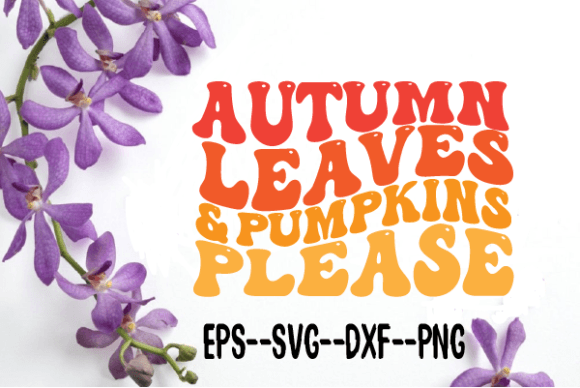
Autumn Leaves Pumpkins Please Wavy SVG
As someone who’s stitched hundreds of seasonal designs—from delicate nursery monograms to bold boutique sweatshirt graphics—I opened Autumn Leaves Pumpkins Please Wavy SVG expecting charm, but what stood out immediately was its quiet confidence. It doesn’t shout “fall.” It leans in—wavy, rhythmic, gently retro—with overlapping leaves and plump pumpkins that flow like a breath rather than a stamp. This isn’t just a holiday graphic; it’s a design with cadence. And for embroidery designers and craft business owners, rhythm translates directly to stitch behavior, fabric drape, and customer resonance.
A Real-World Test: Embroidering a Linen Kitchen Towel for a Local Boutique
Last week, I prepped this design for a limited-run linen tea towel order—a cozy, small-batch product for a downtown gift shop. The client wanted warmth without cliché, texture without clutter. I chose Autumn Leaves Pumpkins Please Wavy SVG not because it’s “on trend,” but because its wave motif naturally follows the grain of woven linen, and its open negative space invites breathing room between stitches. No dense fills choking the fabric. No tight corners begging to pop thread on lightweight weaves. That wave isn’t decorative fluff—it’s functional spacing.
Where It Shines in Embroidery Projects
- Custom apparel: On midweight cotton sweatshirts or structured tote bags, the wavy layout avoids stiff horizontal rigidity—ideal for curved hems or side seams where straight-line designs buckle.
- Baby embroidery & nursery decor: Its soft edges and moderate scale (no tiny stems or micro-pumpkin details) hold up beautifully at 3–4 inches tall—even on brushed cotton onesies or muslin wall hangings.
- Holiday gifts & personalized products: The phrase “Pumpkins Please” adds gentle personality without sounding cutesy or dated. Customers respond well to that subtle wit in handmade gifting—it feels intentional, not mass-produced.
- Etsy listings & small shop merchandise: As a digital embroidery file, it pairs cleanly with neutral backgrounds in printable mockups—no color correction needed. Its retro tone reads well in both warm and cool palettes, making it adaptable across seasonal shop branding.
Where to Proceed Thoughtfully
This design works best when you honor its nature—not force it into roles it wasn’t shaped for. Here’s where attention pays off:
- Small hoop sizes (under 4”): The full wavy composition needs breathing room. Consider cropping thoughtfully—say, isolating one pumpkin + two leaves—for caps or baby bibs. Don’t compress the wave; it loses its grace.
- Textured or stretchy fabrics: On terry cloth towels or ribbed knit baby blankets, use medium-weight cutaway stabilizer and reduce stitch density slightly in leaf veins. The design’s openness helps—but texture can still swallow fine lines.
- Dark fabric backgrounds: Because it’s a sublimation-origin SVG, the original vector lacks built-in underlay logic. When digitizing for embroidery, add light under-stitching beneath pumpkin outlines to prevent shadowing on navy or charcoal.
- Frequent-wash items (tea towels, aprons, kids’ clothes): Avoid satin stitch-heavy interpretations of the pumpkin stems. Opt for smooth running or split stitches instead—they hold up better over time.
What It Adds to Your Handmade Product—Beyond Aesthetics
Using Autumn Leaves Pumpkins Please Wavy SVG does more than fill space—it elevates perception. Customers browsing a craft fair booth or Etsy shop don’t just see “a fall design.” They sense intention: the curve suggests movement, the retro palette hints at heirloom quality, the balanced asymmetry signals hand-curated care. That builds trust faster than any description.
For Etsy sellers and small shop owners, that translates to stronger brand consistency. Pair it with muted thread palettes (ochre, slate, deep rust) and natural fiber bases—organic cotton, linen, unbleached canvas—and your entire autumn collection feels cohesive, even if each item uses only part of the wave.
And let’s talk value: this isn’t filler graphics. Its structure supports versatility. Use it whole on a pillow cover. Extract a single leaf cluster for an embroidered patch. Flip and repeat it as a border on a kitchen towel hem. That flexibility makes it a working asset—not just a seasonal decoration.
Practical Designer Notes Before You Stitch
- Test on scrap fabric first—especially if using textured or dark materials. Observe how the wave’s curves translate in thread tension.
- Check thread color contrast early. The design relies on shape and flow, not heavy outlines—so low-contrast combos (e.g., tan on cream) may read as faint unless stitch density is adjusted.
- Review stitch density in the leaf interiors. If digitizing from scratch, keep fill stitches open enough to preserve fabric softness—critical for baby items or wearable pieces.
- Confirm hoop size compatibility. While the SVG itself scales freely, real-world embroidery requires realistic proportions—aim for minimum 3.5” width for full-wave clarity.
- Inspect small details in black-and-white mockups. Does “Pumpkins Please” remain legible at 2.5” height? If not, simplify letterforms or adjust kerning before digitizing.
- Use proper stabilizer—medium cutaway for stable wovens, tear-away for lighter cottons. The wave’s continuity depends on consistent fabric support.
- Verify licensing terms. Since this is marketed as a printable sublimation design with DXF and EPS files, confirm whether commercial embroidery use (i.e., selling finished embroidered goods) is permitted under the original license.
At its core, Autumn Leaves Pumpkins Please Wavy SVG is a thoughtful piece of design—not just a harvest motif. It respects the material it lands on, the hands that stitch it, and the people who receive it. For embroidery designers and creative entrepreneurs building meaningful, market-ready collections, that kind of integrity is rare. And worth stitching carefully.