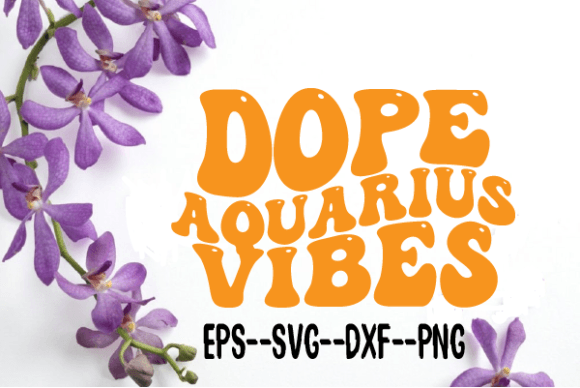
Dope Aquarius Vibes New Wavy Retro Svg
As a designer who’s stitched over 300 custom embroidery projects—from boutique baby onesies to Etsy best-selling tote bags—I opened Dope Aquarius Vibes New Wavy Retro Svg expecting bold personality, not just retro flair. What I found was a design that leans hard into its theme: fluid lines, cosmic softness, and that unmistakable early-’80s wave rhythm—but with enough restraint to avoid visual clutter. It doesn’t scream. It hums. And that matters—especially when you’re translating it from screen to stitch.
First Impressions: Mood Over Mechanics
This isn’t a dense, high-detail machine embroidery design built for trophy-level precision. It’s a graphics-first piece—clean, scalable, and intentionally open. The wavy Aquarius glyph flows across the composition like ink in water, anchored by subtle retro sunbursts and minimalist glyphs. There’s no heavy outlining, no micro-details, no nested layers. That’s not a flaw—it’s a feature. For embroidery, simplicity here is strategic. It means fewer stitch jumps, smoother satin stitch transitions, and breathing room for fabric texture to show through.
Real Project Test: A Linen Tote Bag for a Local Astrology Boutique
Last week, I prepped Dope Aquarius Vibes New Wavy Retro Svg for a limited-run embroidered linen tote—meant for a small shop launching a zodiac-themed summer collection. I converted the provided EPS file into an embroidery format using my standard vector-to-stitch workflow (no auto-trace; manual path cleanup was minimal but necessary). On 10-oz natural linen with medium tear-away stabilizer, the result landed beautifully: airy, intentional, and unmistakably handmade—not mass-produced. Customers responded to how “light” it felt, even though it covered nearly 4” x 4”. That’s the strength of this design: it carries vibe without weight.
Where It Shines—and Where It Needs Caution
Dope Aquarius Vibes New Wavy Retro Svg excels on stable, mid-weight fabrics where stitch definition matters most:
- Custom apparel: Works cleanly on cotton sweatshirts and structured tees—especially when placed on left-chest or sleeve. The curves follow garment contours naturally.
- Tote bag design & pillow covers: Its horizontal flow makes it ideal for wide, flat surfaces. No distortion, no stretching.
- Embroidered patch blanks: Clean outer edges mean crisp heat-seal or sew-on application—no fraying corners.
- Holiday embroidery & personalized gifts: Paired with neutral thread (heather grey, deep navy, or oatmeal), it reads as thoughtful—not trendy—making it strong for baby shower towels or wedding weekend totes.
But proceed thoughtfully in these situations:
- Small hoop sizes (under 3.5”): The full wavy glyph may need gentle cropping—don’t force it. Prioritize the central symbol over full width.
- Stretchy or thin fabric (e.g., baby jersey, lightweight knits): Requires cut-away stabilizer + basting stitch. Those smooth waves turn wobbly without firm backing.
- Curved surfaces like caps: Not ideal unless simplified further—the continuous line struggles with crown curvature.
- Dark fabric + light thread: Test contrast first. The design’s subtlety can vanish without enough tonal separation.
What It Adds to Your Finished Product—Beyond Stitching
This isn’t just about whether the machine runs smoothly. It’s about what the design says before someone even touches the item. Dope Aquarius Vibes New Wavy Retro Svg elevates perceived value because it feels curated—not clip-art. That matters for Etsy sellers pricing hand-finished goods, craft fair vendors building brand trust, and small shop owners differentiating from fast-fashion prints. When customers see this on a tea towel or apron, they don’t think “generic astrology.” They think “someone chose this *for me*.” That emotional resonance directly supports higher price points and repeat buyers.
Practical Embroidery Designer Notes You Can’t Skip
Before committing to a production run—or listing your own version as a digital embroidery file—do these five things:
- Test on scrap fabric first, using your exact stabilizer, thread, and machine tension settings—not just a quick hoop test.
- Review stitch density in your embroidery software. This design should sit between 10–12 stitches/mm. Too dense = stiff fabric; too sparse = gaps in the wavy lines.
- Confirm hoop size compatibility. While the original SVG scales freely, your final embroidery file must fit your machine’s max hoop dimensions without compression artifacts.
- Inspect small details at 200% zoom. Look for stray anchor points or overlapping paths—common in EPS-to-embroidery conversions—that cause jump stitches or thread breaks.
- Check licensing terms carefully. Since this is marketed as a Graphics product for Crafts, confirm whether commercial use (e.g., selling finished embroidered items or reselling edited files) is explicitly permitted. When in doubt, contact the creator.
A Design That Fits Real Creative Workflows
For craft business owners juggling client deadlines, Etsy SEO, and physical production, Dope Aquarius Vibes New Wavy Retro Svg saves time without sacrificing character. It’s not a one-size-fits-all embroidery file—but it *is* a versatile design asset that adapts cleanly to multiple applications: sublimation mugs, printed pillow mockups, and yes—well-executed machine embroidery. Its retro warmth lands differently than neon astro prints or minimalist line art. It’s grounded. Sincere. Quietly confident.
If you’re choosing embroidery project assets for a seasonal launch, a gift line, or a new boutique collection—this one earns its place in your working library. Just remember: great design starts before the needle drops. Respect the file. Respect your fabric. And always, always test.