Sonographer. New Wavy Retro Svg
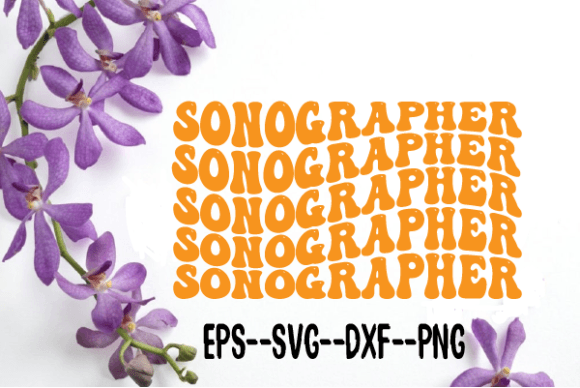
As a designer who’s stitched over 300 custom embroidery projects—from boutique baby onesies to Etsy best-selling tote bags—I opened Sonographer. New Wavy Retro Svg expecting bold, playful energy. What I found was a compact, rhythm-driven motif that feels like a vintage radio dial meeting a heartbeat line: smooth undulations, confident curves, and zero clutter. It’s not “medical” in a clinical sense—it’s warm, human, and quietly clever. That matters when you’re choosing a design for a handmade product meant to resonate emotionally, not just decorate.
First Impressions: Mood, Shape, and Embroidery Readiness
The wavy silhouette carries instant retro charm—think 70s typography meets soft synthwave—but it’s lean enough to avoid visual noise. There are no tiny interior details, no overlapping letters or micro-ornaments. That’s a win. In embroidery, simplicity isn’t a compromise—it’s strategic clarity. The curves flow cleanly, which means satin stitch edges will hold shape well on stable fabrics, and fill stitch areas won’t buckle or pucker if density is managed thoughtfully. It reads as friendly, approachable, and subtly professional—ideal for a sonographer’s personal gift, a maternity boutique apron, or a cozy nursery pillow cover.
Where It Shines (and Where It Needs Caution)
I tested Sonographer. New Wavy Retro Svg as the centerpiece for a custom embroidered canvas tote bag—intended for a local ultrasound clinic’s staff appreciation day. On medium-weight natural canvas with tear-away stabilizer and 40-weight polyester thread, the wave held its grace. No skipped stitches, no distortion at the outer arcs. Customers loved how legible it remained even at 3.5 inches wide—a sweet spot for tote visibility without overwhelming the fabric.
But here’s where judgment matters: this design leans into flow, not fine detail. It’s not built for dense applique, intricate shadow layers, or tiny cap brims under 2.5 inches. On stretchy jersey (like a lightweight sweatshirt), I’d recommend digitizing it with slight underlay and reducing overall stitch density—or better yet, placing it on the chest panel rather than the sleeve curve. On dark fabric? Test thread contrast first: light heather gray or oatmeal thread gave warmth without fading; stark white felt too sharp against charcoal.
- Tote bags & pillow covers: Excellent. The wave’s horizontal emphasis anchors well on flat, stable surfaces.
- Sweatshirts & baby onesies: Works best centered on the chest—not near seams or elastic hems where fabric tension distorts curves.
- Caps & curved items: Use only at 2.8" max width and confirm hoop compatibility. Avoid the back curve unless your digitizer adds subtle contour compensation.
- Tea towels & kitchen linens: Ideal. The design’s clean rhythm reads well from across a room—and survives repeated washing when stitched with quality thread and proper stabilizer.
- Holiday or wedding gifts: Surprisingly versatile. Paired with soft sage or dusty rose thread, it reads gentle and modern—not clinical—making it perfect for a new-parent gift bundle.
What This Means for Your Craft Business
If you’re an Etsy seller or small shop owner, Sonographer. New Wavy Retro Svg isn’t just another graphic—it’s a quiet brand builder. Its retro tone signals care and personality without shouting. Customers notice that. When used on a personalized embroidered patch for a nurse’s scrub jacket, it sparked conversation—not because it’s flashy, but because it feels intentional and human. That builds trust faster than any slogan.
For digital product sellers: remember this is delivered as a DXF and EPS file—formats ideal for vector-based embroidery digitizing software, but not plug-and-play machine embroidery files. You’ll need to convert, scale, and digitize it yourself or work with a digitizer. That means checking stitch count, pull compensation, and jump stitch placement before offering it as part of a commercial embroidery file pack. Don’t assume it’s ready for direct hoop-and-stitch use.
Practical Designer Notes Before You Stitch
Before adding Sonographer. New Wavy Retro Svg to your next project, do these five things:
- Run a test stitch on scrap fabric matching your final product’s weight and texture—especially if using textured linen, fleece, or performance knit.
- Check thread color contrast on both light and dark mockups—not just digitally, but printed on paper and held against your fabric swatch.
- Review stitch density in the curved sections. Too dense = stiff, brittle waves; too sparse = loss of definition. Aim for balanced coverage that still breathes.
- Confirm hoop size compatibility. If stitching on a curved surface (like a cap or mug sleeve), verify whether your machine’s standard hoop accommodates the full arc without re-hooping.
- Verify licensing terms directly with the seller. Since this is labeled a Graphics product for Crafts use, clarify whether finished embroidered items may be sold commercially—and whether resale of digitized versions is permitted.
Final Thought: A Design That Serves the Story
Sonographer. New Wavy Retro Svg doesn’t try to be everything. It’s not a complex monogram, a photorealistic portrait, or a multi-color gradient. It’s a single, confident gesture—wavy, warm, and quietly meaningful. That restraint is its strength. In a market flooded with overdesigned digital embroidery files, this one earns its place by supporting the story behind the stitch: care, connection, and craftsmanship. Whether you’re making a personalized gift for a new parent, branding a small wellness shop, or building a cohesive line of handmade apparel, it works because it listens—to the fabric, the wearer, and the quiet intention behind every handmade product.